
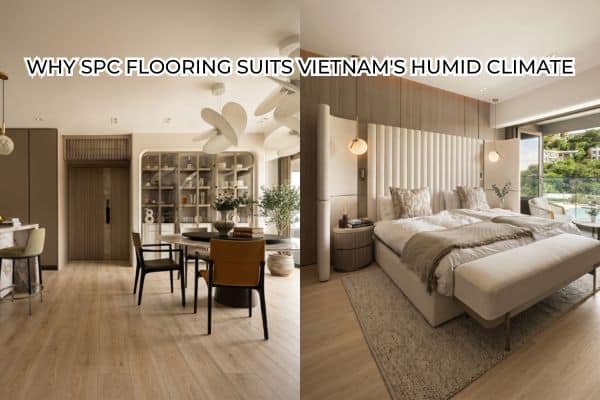
If you’ve lived through a northern Vietnam spring, you already know the problem this article is about: that stretch of weeks when warm, moisture-laden air meets cooler floor and wall surfaces, and condensation (“nồm”) turns your floor damp, slippery, and — for the wrong flooring material — a long-term mold risk. Southern Vietnam’s heat and humidity create a related but different challenge: sustained moisture exposure rather than seasonal condensation. It’s exactly these conditions that make SPC Flooring Suits Vietnam’s Humid Climate.
Why the core matters more than the surface
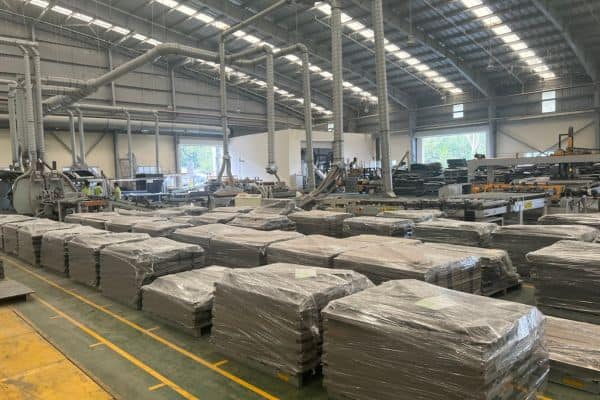
Wood — solid or engineered — absorbs moisture. Even “water-resistant” engineered wood flooring can swell, warp, or delaminate given enough sustained humidity exposure, because the core material itself is hygroscopic. SPC flooring’s core is fundamentally different: a dense composite of limestone powder and PVC resin that doesn’t absorb water the way organic materials do. That’s a structural property of the material, not a surface treatment that wears off over time.
The number that actually matters: IPX7
The claim “waterproof” gets used loosely in flooring marketing, so it’s worth anchoring to an actual standard. IPX7 rating means a product can withstand temporary immersion in water without damage — and 94% of SPC flooring products manufactured in Vietnam are reported to meet this standard, reflecting how central moisture resistance is to the product category as manufactured domestically (Newstrail’s coverage of the Vietnam SPC flooring market).
Regional demand tells the same story
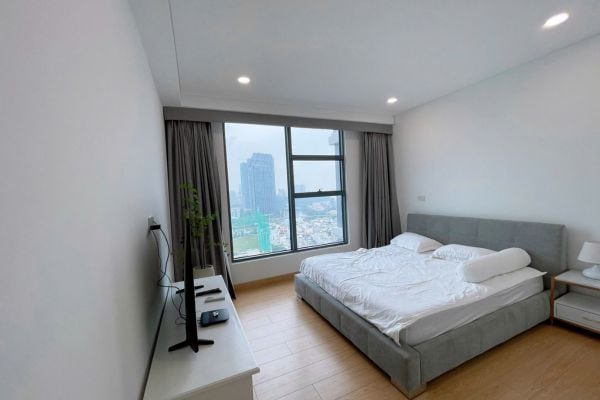
Southern Vietnam — Ho Chi Minh City and its construction-heavy, hot-and-humid climate — accounts for roughly 45% of Vietnam’s SPC flooring demand, the largest regional share, followed by the north (around 30%, driven partly by upscale residential and hotel projects) and the central region (around 25%, the fastest-growing, tied to tourism infrastructure) (Newstrail’s coverage of the Vietnam SPC flooring market). That regional split isn’t accidental — it tracks fairly closely with where moisture resistance is the most immediate, practical concern for a homeowner or builder.
An honest note on perception
It’s worth acknowledging something the market data itself flags: a meaningful share of Vietnamese consumers — reportedly around 42% — still perceive plastic-based flooring as a “lower quality” option compared to natural materials like wood or stone (Newstrail’s coverage of the Vietnam SPC flooring market). That perception gap is worth naming directly rather than glossing over: the case for SPC in a humid climate isn’t an aesthetic argument, it’s a performance argument — a material that structurally doesn’t absorb water is going to outperform one that does in exactly the conditions Vietnam’s climate creates, regardless of how “premium” either one looks in a showroom.
Frequently asked questions about SPC Flooring Suits Vietnam’s Humid Climate
Is “waterproof” flooring marketing always backed by a real test standard? Not always — the claim gets used loosely, which is why it’s worth anchoring to IPX7 specifically: a rating confirming a product withstands temporary immersion without damage, which 94% of SPC flooring made in Vietnam is reported to meet.
Why does wood flooring struggle in Vietnam’s humid climate even when labeled water-resistant? Because the core material itself is hygroscopic — even “water-resistant” engineered wood can swell, warp, or delaminate given enough sustained humidity, since the resistance is a surface treatment rather than a structural property of the core.
Which region of Vietnam has the highest demand for SPC flooring, and why? Southern Vietnam, at roughly 45% of national demand — the largest regional share, tracking closely with where Ho Chi Minh City’s hot, humid climate makes moisture resistance the most immediate practical concern for builders.
Where Tin An fits SPC Flooring
Tin An SPC flooring is 100% waterproof and formaldehyde-free, tested and marketed specifically around the moisture-resistance case made above. If you’re weighing SPC against wood-look alternatives for a home or project in a humid or condensation-prone region of Vietnam, the underlying material question — does the core absorb water or not — is the one worth settling first.