
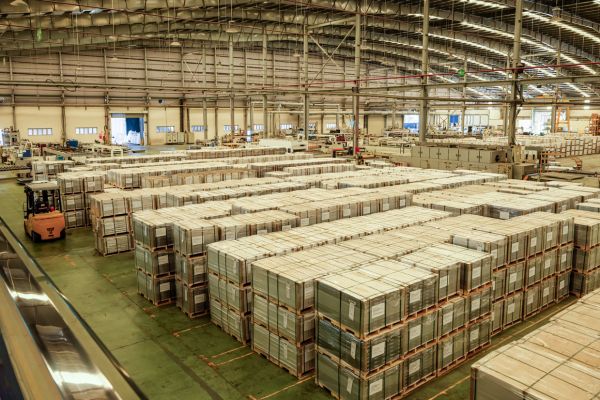
How to vet an SPC flooring manufacturer comes down to more than reading “ISO certified” on a website. The real work happens a level below the marketing copy — in the specific certifications, the way they’re verified, and whether the factory will let you look closely. Here’s a practical checklist covering exactly what to check and how to verify it.
Certifications to check for SPC Flooring Manufacturer
The baseline set worth confirming: ISO 9001 (quality management), FloorScore (indoor air quality — VOC emissions), CARB Phase 2 (formaldehyde emissions compliance, originally a California standard now widely referenced), and CE Marking (EU conformity declaration) (Accio’s supplier checklist for SPC flooring manufacturers in Vietnam). None of these should be taken at face value from a claim alone — ask which accredited lab issued the underlying test report.
How to verify, not just ask
Certifications get verified through independent testing and certification bodies — SGS, TÜV, NAFCA, or SCS Global are the names that typically appear on a legitimate report. A supplier who can produce a report with one of these bodies’ names, a test date, and a specific product/batch reference is in a different category from one who simply states a certification exists. If a supplier can’t produce the underlying report on request, treat the claim as unverified.
The two numbers to ask for directly
Beyond certification names, two technical specifications separate commercial-grade product from consumer-grade: core density (commercial-grade SPC commonly runs ≥2,000 kg/m³) and wear layer thickness (≥0.3mm is a commonly cited industry minimum, with thicker layers for higher-traffic commercial use) (Accio’s SPC flooring supplier reference). Ask for both numbers on the specific SKU you’re evaluating — not a general company-wide claim. A supplier who can share both figures on request, with the batch or SKU clearly noted, is signaling a level of technical transparency that a marketing brochure alone doesn’t provide.
Factory audit checklist: what actually matters
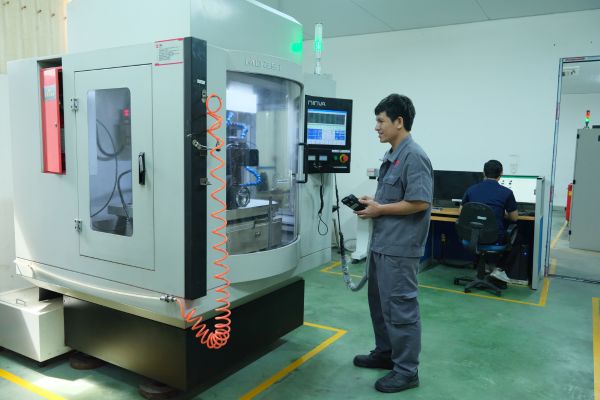
Whether conducted in person or via video call, a useful factory audit focuses on three areas: leadership and quality policy, in-process quality control, and traceability (LeelineGroup’s factory audit checklist). Two red flags worth specifically watching for: undocumented equipment or tooling changes, and a certification scope that doesn’t actually match the product you’re buying (a cert covering one product line doesn’t automatically extend to another). It’s also worth remembering that a sample produced by an R&D team may not reflect real mass-production consistency — ask to trace a specific production lot, not just a showroom sample (InTouch Quality’s factory audit essentials).

Frequently asked questions about SPC Flooring Manufacturer
A supplier can’t produce the underlying test report — what does that mean? Treat it as an unverified claim, not an automatic disqualifier. It means the next step is asking directly for the accredited lab name, test date, and product/batch reference before treating the certification as confirmed.
Is a video call audit good enough, or do I need to visit in person? Either can work well if it’s structured around the same three areas — leadership and quality policy, in-process quality control, and traceability. What matters more than the format is whether the supplier lets you trace a specific production lot rather than just showing a showroom sample.
Does one certification cover a supplier’s whole product range? Not automatically. A certification scope is usually tied to a specific product line, so it’s worth confirming the cert you’re shown actually covers the SKU you’re planning to buy.
What if two suppliers show the same certifications on paper — how do I tell them apart? Compare how they handle verification, not just the certificate list. A supplier that volunteers lab names, test dates, and lets you trace a specific production lot is operating at a different standard than one that treats certification as a checkbox to clear.
Where Tín An fits Tín An holds ISO 9001:2015 and ISO 14001:2015, FloorScore and IAC certification, GreenGuard Gold, and CE Marking, operating a 1-million-sqft facility with capacity for 500+ containers per month and a current export footprint across 20+ countries including the US, Canada, and the EU. We’re set up for both in-person facility visits and video audits — if you’re working through this checklist with a shortlist of suppliers, we’re glad to be evaluated against it directly.