
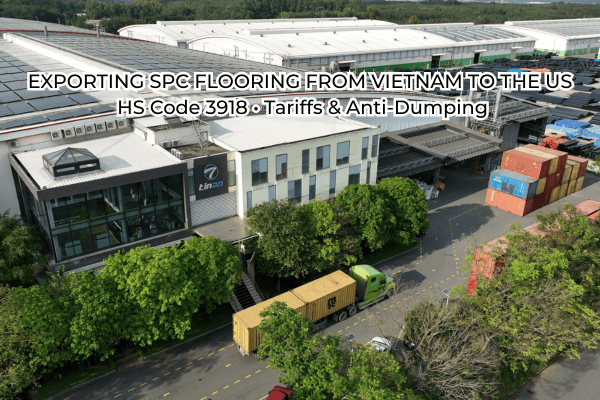
SPC Flooring from Vietnam offers buyers significant sourcing advantages, but its tariff position is more nuanced than that of most Vietnamese exports. Beyond the general tariff framework that applies to Vietnamese goods, SPC is also influenced by a separate US anti-dumping regime that specifically targets Chinese-made products. Understanding the distinction between these two layers is essential to ensure your shipment qualifies for the correct duty treatment and isn’t mistakenly associated with measures that don’t apply to genuine Vietnamese manufacturing.
HS Code 3918 for SPC Flooring from Vietnam
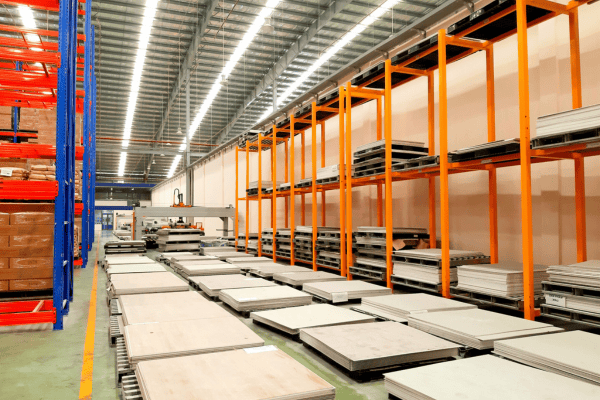
Heading 3918 covers “floor coverings of plastics, whether or not self-adhesive, in rolls or in the form of tiles.” SPC flooring specifically falls under subheading 3918.10 (of polymers of vinyl chloride), with the exact statistical suffix depending on core construction: rigid solid polymer core (the SPC construction), rigid expanded polymer core (more typical of WPC), or other (UNIS’s HTS code reference for 3918.10.10 vinyl tile classification). The general (MFN) duty rate for this HTS line is commonly cited at 5.3%, with “Free” preferential rates available for goods qualifying under applicable free trade agreement rules of origin.
The general tariff layer — same mechanics as any Vietnamese export
Beyond that MFN baseline, Vietnamese-origin goods currently move under the reciprocal/Section 122 framework negotiated in mid-2025, cited at a headline 20% by some trackers with different calculators reading the layered structure differently — and, as with any Vietnamese export right now, that structure is under active legal review and the Section 122 mechanism specifically is expected to sunset around July 24, 2026 absent new legislation (see Dimerco’s 2026 tariff update and TariffCentral.org). Treat any specific number here as a snapshot — confirm current rates with your customs broker before quoting a shipment.
The layer that’s specific to SPC: anti-dumping duties on Chinese product
This is the part that makes SPC different from most product categories. The US has imposed anti-dumping duties on Chinese-made SPC flooring with a notably wide range — reportedly from about 1% up to 240% depending on the specific Chinese exporter (IndexBox’s analysis of SPC flooring trade and anti-dumping measures). That duty targets Chinese-origin product specifically — it does not apply to genuinely Vietnamese-manufactured SPC. But “genuinely manufactured” is the operative phrase, and it’s worth understanding why US Customs treats that distinction seriously rather than as a formality.
In other product categories, US Commerce has run formal anti-circumvention inquiries into whether goods “completed” in Vietnam using Chinese-made components should still be covered by China-specific AD/CVD orders — hardwood plywood and wooden cabinets are two documented examples where Commerce determined that certain Vietnam-assembly scenarios using Chinese components didn’t constitute genuine manufacturing, and were covered by the China order anyway, with resulting duty rates in some cases exceeding 180% (Concord Flooring’s reporting on the Vietnam hardwood plywood circumvention determination; the Federal Register notice on wooden cabinets circumvention scope determinations).
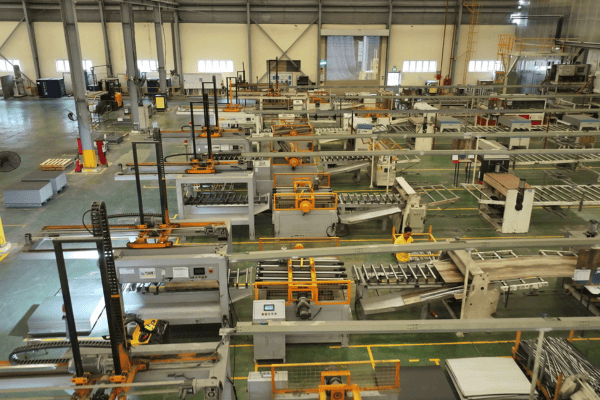
We’re not aware of an active circumvention inquiry specifically targeting SPC flooring from Vietnam as of this writing — but these plywood and cabinet cases show the mechanism is real, used, and enforced, not theoretical. The practical takeaway: verify that your supplier’s SPC core is genuinely formulated and produced in Vietnam — limestone sourcing, PVC compounding, and core manufacturing — not merely finished or packaged there using components sourced from China.
Documentation that matters for this specific risk
Beyond the standard export document set (commercial invoice, packing list, Certificate of Origin, Bill of Lading), a supplier who can walk you through their own raw material sourcing — where the limestone powder and PVC resin actually come from — is giving you exactly the kind of visibility that matters if this product category ever does face closer scrutiny.
Why Choose Tín An for SPC Flooring from Vietnam
Tin An SPC flooring is manufactured at our own facility in Vietnam, and we’re able to speak directly to our material sourcing and production process if that’s part of your due diligence before placing an order.