
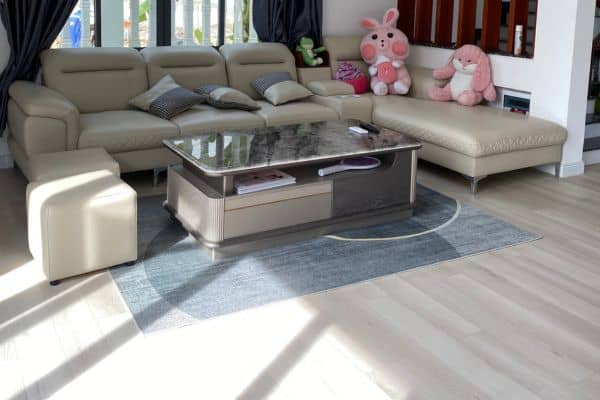
Best Flooring for Apartments needs to balance three things that houses don’t always demand at the same time: moisture resistance, sound control for the unit below, and easy installation without tearing up the existing slab. In Vietnam’s humid and condensation-prone climate, these factors become even more important when choosing flooring that can deliver long-term comfort and performance.
3 Key Criteria for the Best Flooring for Apartments
Moisture resistance rules out plain laminate flooring in most Vietnamese apartments — laminate’s core is wood-fiber based and will swell or delaminate given sustained humidity, condensation, or an occasional leak, which is a real risk in bathrooms, kitchens, and balcony-adjacent rooms.
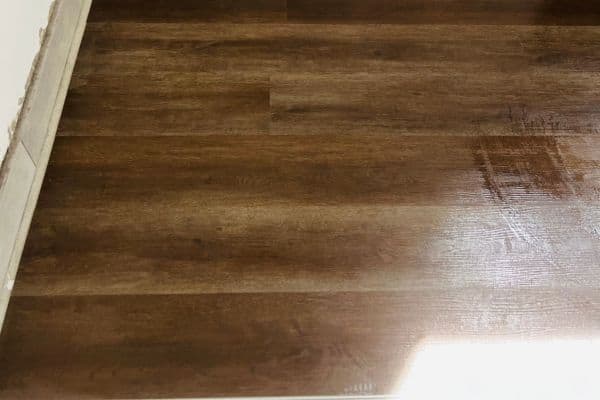
Sound insulation is the criterion apartment buyers underweight most often. Many multi-family building codes and HOA rules require a floor-to-floor Impact Insulation Class (IIC) of 65 or higher — WPC flooring’s foamed core commonly meets that on its own, while denser SPC flooring commonly falls short without added underlayment (we cover this tradeoff in more depth in our SPC vs LVT vs WPC comparison). If your building has strict rules about noise transfer to neighbors — a real concern in many Vietnamese apartment complexes — that’s worth confirming before you commit to a core type.
Installation matters more in an occupied apartment renovation than in new construction: click-lock floating floors (both SPC and WPC use this system) go down over an existing hard surface without glue or major demolition, which matters when you’re renovating a unit you’re already living in.
How the common options stack up
| Laminate (engineered wood) | Ceramic tile | SPC | WPC |
Moisture resistance | Weak — core absorbs water | Strong | Strong (rigid core) | Strong (foam core) |
Underfoot feel | Warm, wood-like | Cold, hard | Cold, firm | Warm, cushioned |
Sound insulation | Moderate | Poor (unless underlayment added) | Needs added underlayment for code compliance | Often meets code on its own |
Installation over existing floor | Possible | Usually requires demolition | Click-lock, no glue | Click-lock, no glue |
Best fit | Bedrooms in dry climates | Bathrooms, balconies | Kitchens, high-traffic common areas | Bedrooms, living rooms, sound-sensitive units |
2026 design trends worth knowing about
Recent international flooring trend coverage (from major trade events like SURFACES/TISE Las Vegas and DOMOTEX Hannover) points to a few themes relevant to apartment design in 2026: a return to natural-inspired aesthetics — warm wood tones, richly textured surfaces, and pattern layouts like herringbone; wider plank formats; and hybrid-core technology that blurs the line between SPC and WPC performance characteristics (DareKaou’s coverage of 2026 global flooring and interior trends). None of that changes the underlying moisture/sound/installation math above — but it does mean you don’t have to trade look for performance the way older vinyl products sometimes required.
Best Flooring for Apartments: Frequently Asked Questions
Does SPC flooring meet apartment sound insulation requirements on its own? Not always — denser SPC flooring commonly falls short of a 65+ Impact Insulation Class without added underlayment, while WPC’s foamed core more often meets that threshold on its own.
Can apartment flooring be installed without tearing up the existing floor? Yes, if it’s a click-lock floating system — both SPC and WPC use this installation method, going down over an existing hard surface without glue or major demolition.
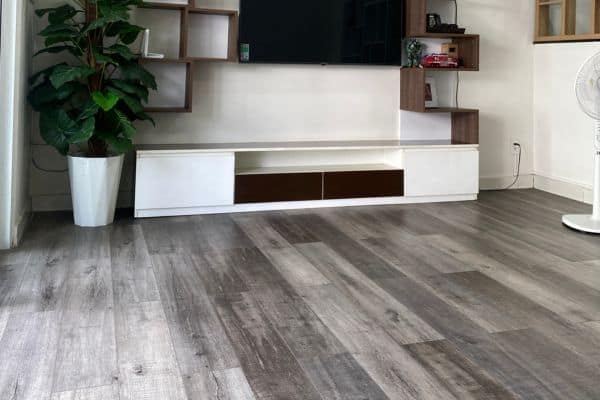
Which flooring option is generally the better fit for bedrooms in a sound-sensitive apartment? WPC tends to fit better than SPC for that specific case — its cushioned, foamed core more often meets sound-insulation requirements on its own, whereas SPC’s denser core commonly needs added underlayment to reach the same standard.
Where Tin An fits
Tin An manufactures both SPC and WPC flooring, so we’re not steering you toward whichever core type happens to be our only option. If you tell us your building’s noise requirements and which rooms you’re flooring, we can help you match the core type to the actual constraint, not just the showroom sample.